Innovation Lab

Clinical mobility pilots built with evidence, security, and service reality from day one.

Ottobock Innovation Lab is the entry point for early-adopter sites that want to test connected mobility workflows, remote fitting support, patient follow-up dashboards, and service intelligence without losing sight of privacy, procurement, or staff capacity.

Connected care protocol

Every pilot starts with a care pathway definition: who enrolls users, what data is reviewed, how clinicians respond, what caregivers receive, and how escalation is documented. This prevents innovation from becoming an unowned data stream.
Cybersecurity review

Security planning covers SBOM expectations, access roles, encryption, vulnerability response, and documentation needed by hospital IT teams before connected devices are introduced to a clinical environment.

Outcome measurement

Pilots define mobility, adherence, service, and satisfaction metrics before launch. The goal is to answer a practical clinical question, not simply deploy technology for its own sake.

Pilot intake sequence

  1. 01

    Define the care setting

    Rehabilitation hospital, prosthetic clinic, veterans network, or home health program.

  2. 02

    Map privacy and IT review

    Identify data fields, system interfaces, consent workflow, and security documentation.

  3. 03

    Select devices and training

    Pair product scope with clinician education, caregiver material, and support coverage.

  4. 04

    Run the pilot

    Track usage, workflow friction, service events, and clinical feedback against the plan.

  5. 05

    Decide scale-up

    Review evidence, economics, staffing burden, and procurement readiness before expansion.

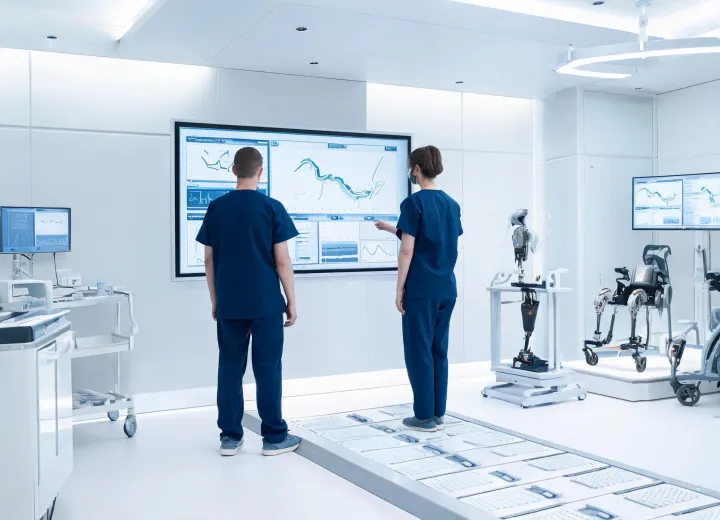
Mobility innovation pilot room

Designed for early adopters who still need governance.

The strongest pilot sites are ambitious and careful. They want to improve patient mobility, but they also need biomedical engineering, IT security, procurement, and clinical leadership to agree on a controlled plan. Ottobock keeps those stakeholders in the room from the beginning.

That approach makes the Innovation Lab useful for both small proof-of-concept projects and larger multi-site programs. A pilot can start with a narrow device cohort, then expand when training burden, service capacity, and outcomes justify the next step.

Submit Pilot Request

Verification method for a 90-day pilot

Ottobock asks pilot sites to define the measurement method before enrollment. A typical protocol uses a 90-day window, a named clinical owner, and a pre-agreed data dictionary so results can be reviewed by procurement and privacy teams.

ElementExample pilot definitionWhy it matters
Cohort20-40 adult users on one microprocessor knee or orthosis familyKeeps training and service load measurable
Primary endpointCompleted follow-up reviews within 30 days post dischargeTests remote-care workflow, not marketing anecdotes
Secondary measuresUsage-hour completeness, service ticket age, caregiver teach-back pass rateSeparates device issues from staffing issues
Data pathDe-identified CSV plus optional HL7 FHIR observation exportSupports IT review without forcing full EHR write-back on day one
Security packageSBOM, role matrix, encryption summary, vulnerability contactRequired before connected devices join a hospital network

Pilot limitations

  • Innovation Lab pilots are not a substitute for 510(k), CE MDR, or local registration evidence required for commercial claims.
  • Remote monitoring does not eliminate in-clinic alignment, socket revision, or fall-risk assessment.
  • If the facility cannot staff alert triage within one business day, Ottobock recommends delaying remote escalation rules.
  • SpO2 accuracy, PEEP, or FiO2 specifications apply only when a cleared monitoring accessory is in scope; mobility dashboards alone do not create those claims.